Sale!

MonoLyser

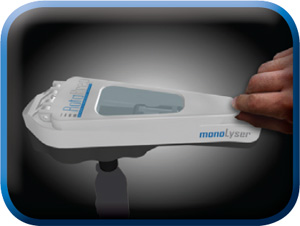
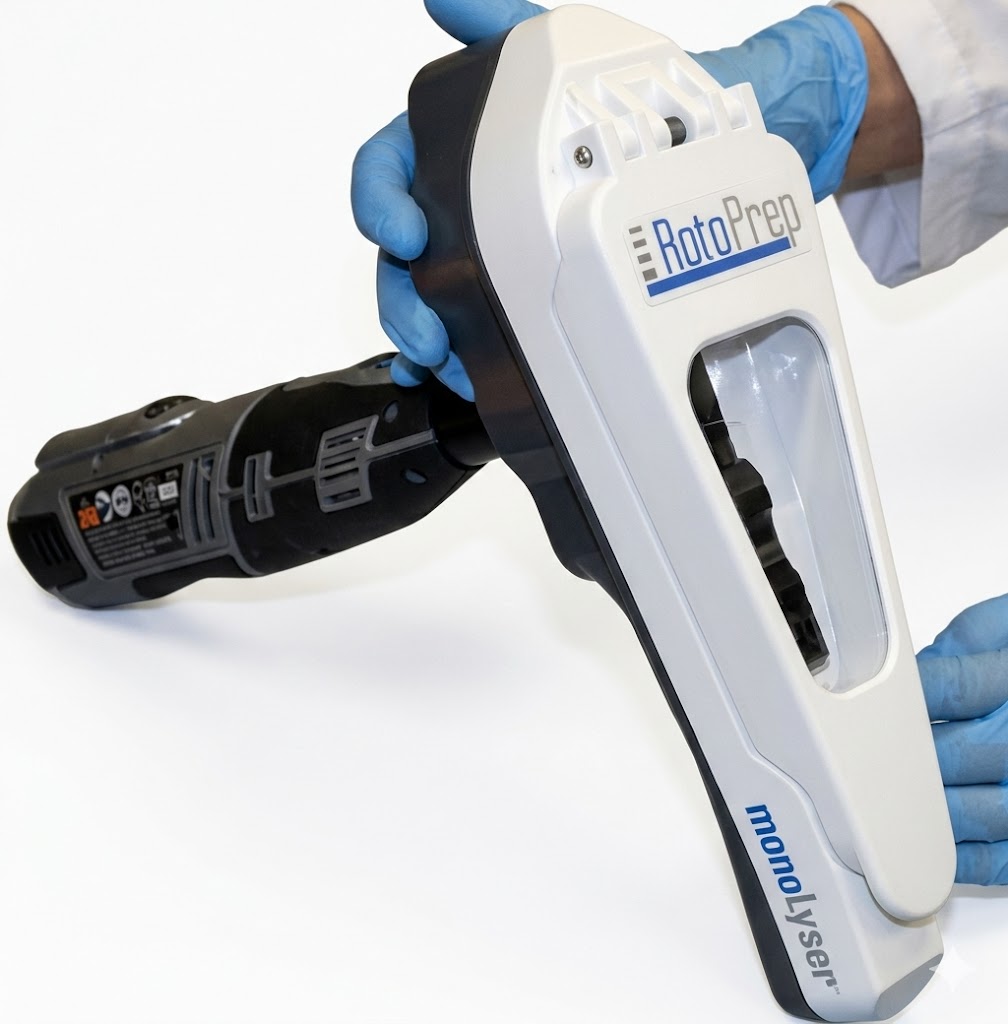
MonoLyser™ the World’s Fastest Lab and Field Life Science Homogenizer. This is an ultrafast lysing tool that can be used in a field or laboratory. An innovative system for fastest sample preparation. Complete homogenization lab, includes: MonoLyser™, rotary tool, two batteries, and charger.


MonoLyser™ the World’s Fastest Lab and Field Life Science Homogenizer

MonoLyser™  is an ultrafast lysing tool that can be used in a field or laboratory. An innovative system for fastest sample preparation. Complete homogenization lab, includes: MonoLyser™, rotary tool, two batteries, and charger.

Too often in today’s molecular biology labs the sample lysis is a bottleneck which delays test results and requires human interaction and follow up for the entire process. The MonoLyser™ does away with that!

The MonoLyser™ system is a sample lysis, homogenization and grinding system for life sciences applications like no other on the market. It is for an order of magnitude faster in performing complete quantitative sample lysis, usually within 5 seconds or less, of even the most difficult biological and environmental samples. You can process any sample for DNA extraction, RNA extraction, and protein extraction in the field, or in lab with ease. Most samples are completely lysed and ready for downstream processing within the 5 seconds!!! Traditional methods of sample lysis require tedious homogenization using a pestle and mortar, ultrasonication, bench scale bead beating equipment, a shearing homogenizer, or enzymatic or chemical treatments. Those processes run from tens of hours to 40 seconds in processing time and quite often produce a bottleneck in the workflow. It is compatible with any downstream protocol for DNA purification, RNA purification, proteins purification, and metabolites purification and characterization.

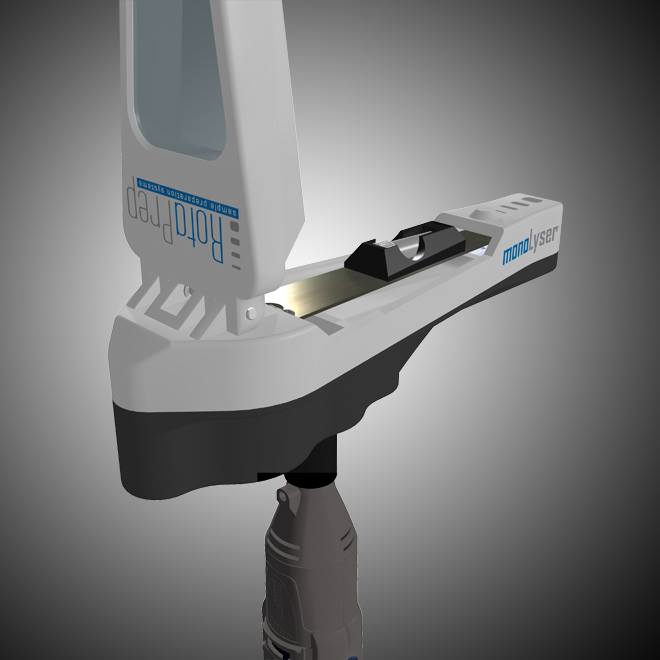
The MonoLyser™ represents novel thinking in the area of sample lysis. It is a portable omni-directional bead beating system with a unique, patent pending balanced crankshaft–slider mechanism which creates the most aggressive bead beating lysis based on combination of cascade impaction, shearing, and if the sample is in buffer, shear flow lysis. The combined kinetics of the processes result in an amazing performances of 5 seconds or less lysing time for most samples, something unheard of in the field!

The MonoLyser™ is an attachment that fits on a high speed rotary tool. Attachment to the tool is done via a built-in threaded adapter. Rotary tools are available in DC (battery) powered versions for field use or AC powered versions, which are ideal for continuous use in a laboratory setting. The high end rotary tools come with an on/off switch separate from the speed control, making it easy to run multiple samples at the same speed.

Application: MonoLyser™ Delivers Almost Instantaneous Lysis

The most valuable feature of our system is an almost instantaneous lysis!

The Monolyser’s unique super-fast kinetics of grinding eliminates most of the time spent in the sample preparation bottleneck. If you work in the field, you are not obliged to bring back entire specimens, just the high quality lysate or extracted DNA for analysis.
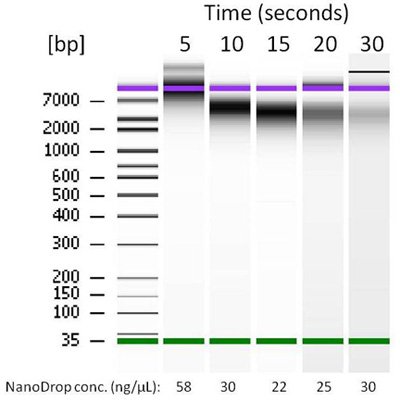
description of Nanodrop

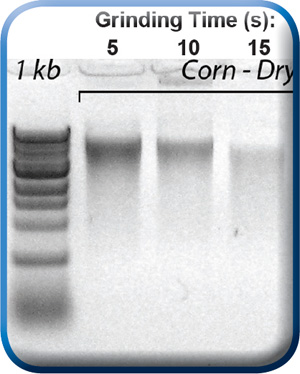
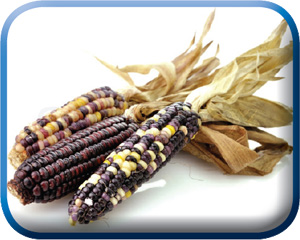
DNA released from corn kernel after 5, 10, 15, 20, and 30 seconds of grinding by the MonoLyser™. Extraction and purification was performed with a Zymo Research ZR-Plant/Seed DNA MiniPrep kit.

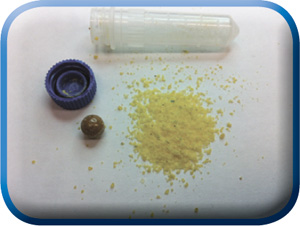
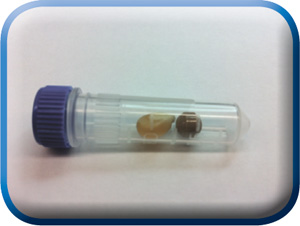
Sample in a 2mL, either conical tube filled with bead beating lysing matrix, is placed in the tube holder by inserting it in, and closing the safety door. By activating the tool at 2/3 of maximum speed setting for 5 seconds, holding it by hand or placing it on a laboratory stand, the complete dry or wet grinding of the even most difficult sample is quantitatively performed. The figure above shows the contents of the tube after dry grinding of a dry corn kernel, one of the most difficult agro/bio samples to process. In order to demonstrate the quality of lysate we performed complete DNA purification followed by analysis with a NanoDrop spectrophotometer and a BioAnalyser system from Agilent Technologies. We used an MP Bio Matrix A tube with two Ľ inch ceramic balls for grinding and a Zymo Research Plant/Seed DNA MiniPrep kit for DNA extraction and purification. After lysis, the sample was centrifuged and the supernatant was processed manually through the kit using a bind-wash-elute column based protocol described in the instructions of the kit. The resulting DNA BioAnalyser image is presented above, together with the DNA quantification data. At 5 seconds, the high quality and quantity of extracted DNA with low shearing is evident. At the longer grinding times, increasing amounts of shearing of DNA as well as decreasing average sizes were observed. This is the shortest time from hard and difficult sample to lysate in the industry. Comparable high end benchtop homogenizers perform the same task for approximately 20 – 40 seconds. The quality and quantity of the extracted DNA in 5 second run is comparable to those obtained by the most current lab bench high throughput homogenizers based upon multi-directional bead beating.
Weight 4 lbs
Dimensions 15 × 15 × 8 in
Packaging Options

1 Monoloyser, 10 Monolysers

Key Features

MonoLyser™ homogenizer for Life Science that can be used in field or laboratory: An innovative system for fastest sample preparation.

Ultrafast Sample Lysis: 5 seconds from sample to lysate for DNA * RNA * PROTEINS

– Omnidirectional motion with the highest g’s!
– Handheld system for lab and field use.
– Best quality and quantity of DNA, RNA, proteins, and metabolites even from the most difficult samples to process, such as:
   • seeds, soil, bones, teeth,
   • tissues, spores, yeasts, and
   • gram positive microbes.
– Uses standard 2 mL screw cap tubes for lysis.
– Compatible with any existing grinding matrices.
– Compatible with ANY downstream purification and analytical protocols.


 You can use MonoLyser lab homogenizer for:

Soil samples homogenization, Waste Water samples homogenization, Sewage samples homogenization, Sludge samples homogenization, Fecal samples homogenization, Plant samples homogenization, Plant Tissue samples lysis, Leaf samples homogenization, Stem samples homogenization, Leaves samples homogenization, Flower samples homogenization, Fruit samples homogenization, Bacteria samples homogenization, Gram + samples homogenization, Gram – samples homogenization, Mycobacteria samples lysis, Bacterial Cell samples lysis, Archea bacteria samples lysis, Cyanobacteria samples lysis, Salmonella samples homogenization, Gram + Bacteria samples lysis, Gram – Bacteria samples lysis, Mrsa samples homogenization, Staph samples homogenization, S. Aureus samples homogenization, S, Cerevisae samples lysis, S. Pombe samples homogenization, S. Uvarum samples homogenization, Cardiac samples homogenization, E. Coli samples homogenization, Yeast samples homogenization, Tissue samples homogenization, Bone samples homogenization, Muscle samples homogenization, Skin samples homogenization, Fungi samples homogenization, Fungal Spore samples lysis, Bacterial Spore samples lysis, Spore samples homogenization, Blood samples homogenization, Buffy Coat samples homogenization, Plasma samples homogenization, Saliva samples homogenization, Sputum samples homogenization, Connective Tissue samples lysis, Viral samples homogenization, Pathogen samples homogenization, Parasite samples homogenization, Tumor samples homogenization, Tumor Tissue samples lysis, Biopsy samples homogenization, Root samples homogenization, Feces samples homogenization, Food samples homogenization, Seed samples homogenization, Genomic Dna samples homogenization, Mitochondrial Dna samples lysis, Chromasomal Dna samples lysis, Genomic Dna Isolation, Genomic Dna Extraction, Mitochondrial Dna Isolation, Mitochondrial Dna Extraction, Chromasomal Dna Isolation, Chromasomal Dna Extraction, Dna samples homogenization, Rna samples homogenization, Dna Isolation samples lysis, Dna Extraction samples lysis, Rna Isolation samples lysis, Rna Extraction samples lysis, Protein Isolation samples lysis, Protein Extration samples lysis, Protein samples homogenization, Nucleic Acid samples lysis, Nucleic Acid Extraction, Nucleic Acid Isolation, Nucleic Acids samples lysis, Plasmid samples homogenization, Forensic samples homogenization, C, Elegans samples homogenization, Drosophila samples homogenization, Genomic samples homogenization, Proteomic samples homogenization, Oncology samples homogenization, Environmental samples lysis, Laboratory samples homogenization, Biological samples homogenization, Pathology samples homogenization, Microbiological samples lysis, Microbe samples homogenization, Clay samples homogenization, Dirt samples homogenization, Silt samples homogenization, Organelles samples homogenization, Er samples homogenization, Golgi samples homogenization, Mitochondria samples lysis, Nuclear samples homogenization, Chloroplast samples homogenization, Lysozome samples homogenization, Chromatin samples homogenization, Glycoprotein samples lysis, Membrane samples homogenization, Membrane Bound Protein sample lysis Squamous samples homogenization, Epithelial samples homogenization, Cell samples homogenization, Cultured Cells samples lysis, Cellular samples homogenization, Epidermal samples homogenization, Buccal samples homogenization, Adipose samples homogenization, Teeth samples homogenization.

Simple to Use

simple-to-use_01 (1)  Difficult to lyse sample.
simple-to-use_02  Load tube with sample (dry corn kernel) and ceramic ball.
simple-to-use_03  5 s lysis in MonoLyser™.
simple-to-use_04  Results of 5 s lysis of dry corn kernel.
simple-to-use_05  Genomic DNA from corn kernel.
Contact: Tel. +1-949-275-3380 Fax. +1-208-979-2687 hkido@rotaprep.com  Instructional Video

Data Sheet

Name of Product: MonoLyser™
Product Number: MLYS01
Date: February 7, 2013
RotaPrep MonoLyser™ Lab and Field Life Science Homogenizer. Patent Pending.
Disruption Principle Combination of cascade impaction, mechanical shearing, and shear-flow lysis based on multi-directional bead beating.
Kits compatible with instrument All sample preparation protocols and kits, which use 2ml sample lysis tubes for bead beating-based homogenization. Compatible with any downstream protocol for DNA, RNA, proteins, and metabolites purification and characterization.
Power requirements 90-240V for lab version, cordless operation for field version.
Overall Length 1.3″
Overall Width 3.4″
Overall Height 4.6″
Weight 2.2 lbs.
Number of Tubes per Run 1
Size of Tube Standard 2 ml (screw cap), with skirted or non-skirted bottom.
Maximum speed 4,900 CPM ( AC powered ) 4,400 CPM ( cordless)
Minimum speed 1,000 CPM (AC powered) 500 CPM (cordless)
Type of Motion Reciprocating
Peak to Peak Amplitude of Motion Peak Acceleration 1.5” up to 500 G.
Sound at 1ft. 100 dB at 4,900 CPM 90 dB at 3,300 CPM
Typical Run Time 2-15 seconds at 3,300 CPM
Features Fastest, (2-15 sec/sample), complete, quantitative sample lysis of most difficult samples. Maximum recovery of DNA, RNA, proteins and metabolites. Wet and dry sample grinding. Closed disposable samples container, prevents cross contamination. Compatible with all downstream processing and kits, including any of the bind-wash-elute protocols, solid phase extraction, phase separations, HPLC, GC, and mass spec processing. Hand-held, safe for field use, with built-in battery power supply.

Library

monoLyser_manual_2013-07-01_web_download        MonoLyser™ Instructions manual
monoLyser_manual_2013-07-01_web_download        BioTechniques article about monoLyser™
MonoLyser_2-Page-brochure_letter_v04c_web_download_100x77        Download MonoLyser™ Brochure
MonoLyser_Specifications_2013-04-12_web_download        Download MonoLyser™ Specifications Sheet
press-release_MonoLyser_2013-04-15_web_download        Download MonoLyser™ Press Release 2013-04-15

Articles

REFERENCES

RotaPrep Inc Peer Reviewed Publications Citations/References

Researchers around the world continue to publish peer-reviewed studies that rely on HyperLysis technologies and the MonoLyser system for fast and reliable sample preparation. The selection of references below highlights the range of applications in which these instruments appear, from molecular biology to environmental analysis. The MonoLyser is also distributed by MP Biomedicals under the OEM name  “SuperFastPrep-2”, so published work citing either platform reflects the same RotaPrep Inc manufactured equipment with underlying mechanical performance and workflow:


References for MonoLyser

  1. Kido, Horacio. “Hand-Held Homogenization Tool: New System Can Be Used in Field or Laboratory.” Genetic Engineering & Biotechnology News 33.8 (2013): 24-25.
  2. Kido, Horacio. “Portable Systems for Sample Lysis and Homogenization.” Sample Preparation Techniques for Soil, Plant, and Animal Samples. New York, NY: Springer New York, 2016. 117-123.
  3. Ahmed, Bilal, et al. “Development of a Portable Paper-based Biosensor for the Identification of Genetically Modified Corn (Zea mays) and Soybean (Glycine max).” Biosensors and Bioelectronics (2025): 117690.
  4. Huang, Xiang-Feng, et al. “Culture strategies for lipid production using acetic acid as sole carbon source by Rhodosporidium toruloides.” Bioresource technology 206 (2016): 141-149.
  5. Liu, Jia, et al. “Bioconversion of mixed volatile fatty acids into microbial lipids by Cryptococcus curvatus ATCC 20509.” Bioresource Technology 241 (2017): 645-651.
  6. Huang, Xiangfeng, et al. “Enhancement of lipid accumulation by oleaginous yeast through phosphorus limitation under high content of ammonia.” Bioresource Technology 262 (2018): 9-14.
  7. Liu, Jia, et al. “Microbial conversion of mixed volatile fatty acids into microbial lipids by sequencing batch culture strategy.” Bioresource Technology 222 (2016): 75-81.
  8. Huang, Xiang-Feng, et al. “Using non-ionic surfactant as an accelerator to increase extracellular lipid production by oleaginous yeast Cryptococcus curvatus MUCL 29819.” Bioresource technology 274 (2019): 272-280.
  9. Liu, Jia’nan, et al. “Efficient bioconversion of high-content volatile fatty acids into microbial lipids by Cryptococcus curvatus ATCC 20509.” Bioresource technology 239 (2017): 394-401.
  10. Huang, Xiang-Feng, et al. “Enhanced biodiesel production from glucose-fed activated sludge microbial cultures by addition of nZVI and FeCl 3.” RSC Advances 6.91 (2016): 88727-88735.
  11. Liu, Jia, et al. “Bioconversion of volatile fatty acids derived from waste activated sludge into lipids by Cryptococcus curvatus.” Bioresource Technology 211 (2016): 548-555.
  12. Xu, Jingcheng, et al. “Application of de-lignified cellulose to enhance intracellular and extracellular lipid production from oleaginous yeast using acetic acid.” Bioresource Technology 293 (2019): 122032.
  13. Bhavsar, Yash, and Yajamana Ramu. “Investigating the effects of mutations of amino acids on the protein expression of CDK2 cancer gene.”
  14. Killermann, Berta, et al. “Quantitativer und qualitativer Nachweis von Brandkrankheiten (Tilletia spp., Ustilago nuda) bei Weizen und Gerste mittels biotechnologischer Methoden (q-PCR, LAMP-Technologie).” (2021).
  15. Huang, Xiang-feng, et al. “Enhancement of extracellular lipid production by oleaginous yeast through preculture and sequencing batch culture strategy with acetic acid.” Bioresource Technology 247 (2018): 395-401.
  16. Leet, Killu. L-ascorbic acid (vitamin C) production by bioengineered Saccharomyces cerevisiaeMS thesis. Eesti Maaülikool, 2022.
  17. De Biaggi, Juliano Sabedotti. “MODIFICAÇÃO GÊNICA E MODELAGEM METABÓLICA.” (2023).

References for SuperFastPrep-2 (OEM MonoLyser)

  1. Schang, Christelle, et al. “A low-cost homogenizing device for in-field and remote DNA and RNA extraction.” HardwareX 20 (2024): e00592.
  2. Barber, Daniel G., et al. “Statistical design approach enables optimised mechanical lysis for enhanced long-read soil metagenomics.” Scientific Reports 14.1 (2024): 28934.
  3. Heavens, Darren, et al. “How low can you go? Driving down the DNA input requirements for nanopore sequencing.” BioRxiv (2021): 2021-10.
  4. Villavicencio-Carrisoza, Oscar, et al. “Isolation of total DNA from Placenta Samples, both Fresh and following Formalin and Paraffin Treatment.” Maternal Placental Interface: Methods and Protocols. New York, NY: Springer US, 2024. 171-178.
  5. Maggiori, Catherine, et al. “MinION sequencing from sea ice cryoconites leads to de novo genome reconstruction from metagenomes.” Scientific reports 11.1 (2021): 21041.
  6. Bian, Kaiqin, et al. “Quantitative metagenomics using a portable protocol.” bioRxiv (2025): 2025-10.
  7. Martínez-Herrera, Sayra Cecilia, et al. “Check Chapter 15 updates for.” Maternal Placental Interface: Methods and Protocols 2781 (2024): 163.
  8. Edwards, Arwyn, et al. “Before you go: a packing list for portable DNA sequencing of microbiomes and metagenomes.” Microbiology (United Kingdom) 168.7 (2022): 001220.
  9. Wilkerson-Vidal, Quiana C., et al. “Male LEW. 1WR1 rats develop metabolic dysfunction, steatohepatitis, and liver damage.” Endocrines 5.2 (2024): 166-185.
  10. Lee, Sang-woo, et al. “Developmental role of hyaluronic acid and its application in salivary gland tissue engineering.” Acta biomaterialia 115 (2020): 275-287.
  11. Zelentsova, Ekaterina A., Vadim V. Yanshole, and Yuri P. Tsentalovich. “A novel method of sample homogenization with the use of a microtome-cryostat apparatus.” RSC advances 9.65 (2019): 37809-37817.
  12. Hong, Heesun, et al. “Digital light processing 3D printed silk fibroin hydrogel for cartilage tissue engineering.” Biomaterials 232 (2020): 119679.
  13. Wen, Jianfeng, Mark W. LeChevallier, and Wendong Tao. “Nitrification kinetics and microbial communities of activated sludge as a full-scale membrane bioreactor plant transitioned to low dissolved oxygen operation.” Journal of cleaner production 252 (2020): 119872.
  14. Regan, Tim, et al. “Non-invasive detection method for Bonamia ostreae infected Ostrea edulis.” Aquaculture 599 (2025): 742153.
  15. Ajiteru, Olatunji, et al. “A digital light processing 3D printed magnetic bioreactor system using silk magnetic bioink.” Biofabrication 13.3 (2021): 034102.
  16. Lee, Ji Seung, et al. “3D-printable photocurable bioink for cartilage regeneration of tonsil-derived mesenchymal stem cells.” Additive Manufacturing 33 (2020): 101136.
  17. Park, Hae Sang, et al. “Fluidic integrated 3D bioprinting system to sustain cell viability towards larynx fabrication.” Bioengineering & Translational Medicine 8.2 (2023): e10423.
  18. Wen, Jianfeng, et al. “Nitrous oxide emission and microbial community of full-scale anoxic/aerobic membrane bioreactors at low dissolved oxygen setpoints.” Journal of Water Process Engineering 38 (2020): 101654.
  19. Wen, Jianfeng, Mark W. LeChevallier, and Wendong Tao. “Microbial community similarity and dissimilarity inside and across full-scale activated sludge processes for simultaneous nitrification and denitrification.” Water science and technology 81.2 (2020): 333-344.
  20. Touchette, David, et al. “Microbial characterization of Arctic glacial ice cores with a semiautomated life detection system.” Astrobiology 23.7 (2023): 756-768.
  21. Kim, Soon Hee, et al. “Rapidly photocurable silk fibroin sealant for clinical applications.” NPG Asia Materials 12.1 (2020): 46.
  22. Andersen, Martin Hjorth, et al. “Fast DNA-analyses for surveillance of microbial communities in full-scale deammonification tanks: Potential for control and troubleshooting.” Water Research 236 (2023): 119919.
  23. Ivanov, L. A., et al. “Shifts in Pigment Content along an Arid Altitudinal Gradient as a Mechanism for the Regulation of the Photosynthetic Capacity of Plants in the Gobi.” Contemporary Problems of Ecology 18.5 (2025): 698-707.
  24. Ziganshina, Elvira E., et al. “Bacterial communities associated with atherosclerotic plaques from Russian individuals with atherosclerosis.” PloS one 11.10 (2016): e0164836.
  25. Hwang, Geumbit, Hyejin Seo, and Joo-Cheol Park. “Copine7 deficiency leads to hepatic fat accumulation via mitochondrial dysfunction.” Heliyon 9.11 (2023).
  26. Lee, Ji Seung, et al. “Hybrid 3D bioprinting for advanced tissue-engineered trachea: merging fused deposition modeling (FDM) and top–down digital light processing (DLP).” Biofabrication 17.1 (2024): 015026.
  27. Sinigalliano, Christopher, et al. “Microbial source tracking of fecal indicating bacteria in coral reef waters, recreational waters, and groundwater of Saipan by real-time quantitative PCR.” Frontiers in Microbiology 11 (2021): 596650.
  28. Kim, Junchul, Sang-Woo Lee, and Kyungpyo Park. “CXCR4 regulates temporal differentiation via PRC1 complex in organogenesis of epithelial glands.” International Journal of Molecular Sciences 22.2 (2021): 619.
  29. Yarullina, Dina R., et al. “Characterization of gut contractility and microbiota in patients with severe chronic constipation.” PLoS One 15.7 (2020): e0235985.
  30. Wilkerson-Vidal, Quiana C., et al. “Insulin-Resistant Male LEW. 1WR1 Rats Do Not Develop β-Cell Mass Expansion in Response to a Moderate Sucrose Diet.” Journal of Molecular Pathology 5.3 (2024): 276-291.
  31. Zhang, Tao, et al. “Diversity and distribution of lichen-associated fungi in the Ny-Ålesund Region (Svalbard, High Arctic) as revealed by 454 pyrosequencing.” Scientific Reports 5.1 (2015): 14850.
  32. Pallen, Mark J., et al. “Faecal metagenomes of great tits and blue tits provide insights into host, diet, pathogens and microbial biodiversity.” Access Microbiology 7.4 (2025): 000910-v3.
  33. Gopaulchan, David, et al. “A defined microbial community reproduces attributes of fine flavour chocolate fermentation.” Nature Microbiology (2025): 1-23.
  34. Khadair, Sana Salman. “NMR Analysis of Metabolomic Changes in Levels of Neurotransmitters in Rodents.” (2019).
  35. Ziganshina, Elvira E., et al. “Comparison of anaerobic digestion strategies of nitrogen-rich substrates: performance of anaerobic reactors and microbial community diversity.” Waste Management 59 (2017): 160-171.
  36. Lee, Sang-woo, et al. “Efficient surface immobilization of chemically modified hyaluronans for enhanced bioactivity and survival of in vitro-cultured embryonic salivary gland mesenchymal cells.” Polymers 13.8 (2021): 1216.
  37. de Menezes, Alexandre Barretto, et al. “Relationships between radiation, wildfire and the soil microbial communities in the Chornobyl Exclusion Zone.” Science of the Total Environment 950 (2024): 175381.
  38. 이상우. Biomimetic Approaches for Tissue Engineering Based on the Roles of Hyaluronic Acid in Salivary Gland Development. Diss. 서울대학교 대학원, 2021.
  39. Zhang, Tao, et al. “Diversity and distribution of fungal communities in the marine sediments of Kongsfjorden, Svalbard (High Arctic).” Scientific reports 5.1 (2015): 14524.
  40. Смирнов, А. В., et al. “Получение трансгенных линий мышей для изучения возможности конверсии лактозы в галактоолигосахариды в молочной железе.” ПИСЬМА В ВАВИЛОВСКИЙ ЖУРНАЛ ГЕНЕТИКИ И СЕЛЕКЦИИ УчредителиФедеральный исследовательский центр институт цитологии и генетики СО РАН 7.4 (2021): 176-193.
  41. Child, Harry T., et al. “Laboratory and In-Field Metagenomics for Environmental Monitoring.” Genome Assembly. New York, NY: Springer US, 2025. 71-88.
  42. Sindhu, Lara, et al. “Meta-omics revealed that nitrogen fertilization alters the endophytic fungi divergence in maize field ecosystem.” Ecological Indicators 160 (2024): 111852.
  43. Sondhiya, Shubhank. The robotic molecular biologist-automated processing of astrobiological samples for planetary missions. Diss. Carleton University, 2020.
  44. Sambasivam, Prabhakaran, et al. “A rapid electrochemical biosensor diagnostic for Botrytis ssp. causing Botrytis gray mold of temperate legumes.” ACS Agricultural Science & Technology 4.11 (2024): 1184-1193.
  45. Zhang, Tao, and Yi-Feng Yao. “Endophytic fungal communities associated with vascular plants in the high arctic zone are highly diverse and host-plant specific.” PLoS One 10.6 (2015): e0130051.
  46. Zhang, Tao, Neng-Fei Wang, and Li-Yan Yu. “Geographic distance and habitat type influence fungal communities in the Arctic and Antarctic sites.” Microbial ecology 82.1 (2021): 224-232.
  47. Zhang, Tao, et al. “A comprehensive assessment of fungal communities in various habitats from an ice-free area of maritime Antarctica: diversity, distribution, and ecological trait.” Environmental Microbiome 17.1 (2022): 54.
  48. Arslanova, Alisa, et al. “Protective effects of probiotics on cognitive and motor functions, anxiety level, visceral sensitivity, oxidative stress and microbiota in mice with antibiotic-induced dysbiosis.” Life 11.8 (2021): 764.
  49. Wimalarathne, Madushika M. Hyperinsulinemic LEW. 1WR1 rats develop insulin resistance and nonalcoholic steatohepatitis. The University of Alabama in Huntsville, 2023.
  50. 한상인. Synthesis of Bimetallic Nanomaterials for Stretchable Biomedical Device and Radioprotective Agent. Diss. 서울대학교 대학원, 2019.
  51. Zhang, Tao, Nengfei Wang, and Liyan Yu. “Host-specificity of moss-associated fungal communities in the Ny-Ålesund region (Svalbard, High Arctic) as revealed by amplicon pyrosequencing.” Fungal Ecology 53 (2021): 101092.
  52. Bade, Pauline, et al. “Integrative analysis of human macrophage inflammatory response related to Mycobacterium tuberculosis virulence.” Frontiers in Immunology 12 (2021): 668060.
  53. Lamprecht, Dirk A., et al. “Targeting de novo purine biosynthesis for tuberculosis treatment.” Nature (2025): 1-7.
  54. Knapp, Kiley A., et al. “Evaluation of Sas1B as a target for antibody-drug conjugate therapy in the treatment of pancreatic cancer.” Oncotarget 9.10 (2018): 8972.
  55. Bautista, Juan Sebastián Osorio. “Desarrollo de un algoritmo predictor de consorcios bacterianos, partiendo de características metabólicas con potencial uso para la biorremediación de aguas residuales contaminadas con cromo hexavalente.”
  56. Калинин, Егор Валерьевич. “БИОМЕДИЦИНСКИЙ ПОТЕНЦИАЛ ФАКТОРА ПАТОГЕННОСТИ LISTERIA MONOCYTOGENES INLB.”
  57. Badé, Pauline. Étude du rôle de la réponse inflammatoire et des microARN du macrophage au cours de l’infection avec Mycobacterium tuberculosis. Diss. Université Montpellier, 2021.
  58. Harris, Shelley Elizabeth. Effects of hypothyroidism on pancreatic islet development and tissue insulin signalling pathways in the ovine fetus. Diss. Oxford Brookes University, 2016.
Call US: 1-949-275-3380